Item addedItem updatedItem removedNo more products on stockYou entered wrong value.
No products in the cart.
Genuine Weber BBQ Parts: How to Find the Right Replacement for Your Grill
Genuine Weber BBQ Parts: How to Find the Right Replacement for Your Grill
A Weber barbecue can provide years of reliable outdoor cooking, but components such as cooking grills, burners, ignition parts, heat deflectors and thermometers can wear over time. Selecting the correct weber bbq parts helps maintain cooking performance, supports safe operation and can extend the working life of the barbecue.
The most important part of replacing a component is compatibility. A replacement part may look similar to the original but still be unsuitable for a different grill size, production generation or fuel type. Before purchasing, identify the exact barbecue model, record its serial number and review the part’s compatibility information.
This guide explains how to identify worn components, check model compatibility, maintain a Weber barbecue and make informed decisions when replacing parts.
Why Genuine Weber BBQ Parts Matter
Barbecue parts are designed around the dimensions and layout of a particular grill. Burner systems, cooking grills, warming racks, ignition components and grease-management trays can vary between Weber models, even within the same range.
Using genuine weber bbq parts can help ensure that the replacement component has the correct fit, mounting points and heat-management design for the barbecue. This is particularly important for gas components, ignition systems and parts located close to high heat.
The right replacement part can help you:
Maintain more even heat across the cooking surface.
Reduce grease build-up around burners.
Keep cooking grills secure and stable.
Support reliable ignition and burner performance.
Maintain the correct fit of lids, handles and warming racks.
Avoid unnecessary modifications to the barbecue.
Extend the lifespan of the grill through timely maintenance.
Generic replacement components may sometimes be available, but they should be used carefully. A part should not be selected only because it looks similar. Measurements, mounting positions, material type and model compatibility should all be checked before installation.
How to Identify Your Weber Barbecue Model
Identifying the barbecue correctly is the first step in finding compatible parts. Searching only by a broad phrase such as “Weber barbecue” can lead to incorrect results because Weber produces multiple sizes, fuel types and generations.
Find the serial number
The serial number is generally the most useful identifier when checking replacement compatibility. Depending on the model, it may be found on the frame, inside the cabinet, beneath the control panel, on the lid or on an information label.
Before searching for weber bbq parts, record:
The barbecue range, such as Q, Spirit, Genesis, Summit or Slate.
The complete model name.
The model number.
The serial number.
The number of burners.
The fuel type.
The approximate year of purchase.
The cooking grill dimensions.
A complete model name is more reliable than a general range name. For example, “Genesis” may describe several barbecue sizes and designs, while a full model reference provides more accurate compatibility information.
Measure the existing part
Measurements can help confirm whether a part is likely to fit, particularly for cooking grills, warming racks, heat deflectors and drip trays. Measure the width, depth, thickness and position of any mounting points.
However, measurements should not be the only method used. A cooking grate can have the same dimensions as another model but still use different support tabs or hinge fittings.
Take clear photos
Photographs are useful when comparing components. Take photos of the entire barbecue, the replacement area and the worn part before removing it. Include close-up images of brackets, holes, fittings, labels and connections.
This is especially useful for burner tubes, ignition electrodes, lid handles and other components that may differ in small but important ways.
Common Weber BBQ Parts That Need Replacement
Barbecue components experience repeated heat, grease, moisture and cleaning. Some parts can last many years with proper care, while others need more regular inspection.
Cooking grills and grates
Cooking grates may become worn through rust, corrosion, chipped coating, warping or accumulated food residue. Porcelain-enamelled grates can eventually chip, while stainless steel grates can develop stubborn build-up or corrosion if not maintained.
Consider replacing cooking grills when:
The grate has sharp, broken or unstable sections.
Rust is extensive or flakes onto the cooking surface.
Porcelain enamel is badly chipped.
The grill no longer sits securely in the barbecue.
The cooking surface has warped.
Food repeatedly sticks despite suitable cleaning and preparation.
Cleaning after use can help delay replacement. Once the barbecue is cool enough to handle safely, remove loose food residue with an appropriate brush or scraper. Avoid aggressive tools that may damage coated surfaces.
Burner tubes
Gas burner tubes require regular attention because blocked ports and corrosion can affect flame quality. Uneven heat, low flame output, yellow flames or areas that do not heat properly may indicate a burner issue.
Before replacing a burner, inspect it for grease, debris, insect nests or blocked ports. If cleaning does not resolve the issue, replacement may be needed.
Do not enlarge burner ports, bend gas components into position or use improvised fittings. Turn off the gas supply and allow the barbecue to cool completely before inspecting or removing any burner component.
Heat deflectors and flavourizer bars
Heat deflectors and flavourizer bars sit between the burners and cooking surface in many gas barbecues. They help protect burners from dripping grease and assist with heat distribution.
Replace them when they have burned through, developed large holes, lost their shape or no longer sit properly in the cooking box. A damaged heat-management component can expose burners to excessive grease and contribute to uneven cooking.
Ignition components
An ignition system may include a battery, push button, electronic module, wiring and electrodes. If the barbecue does not ignite, do not immediately assume the full system requires replacement.
Check for:
A flat or incorrectly installed battery.
Loose wiring.
Dirt around the electrode.
A cracked electrode.
An incorrect gap between the electrode and burner.
Moisture inside the ignition area.
If the igniter clicks but there is no visible spark, the electrode or wiring may need attention. If there is no clicking sound, the battery, switch or ignition module may be the issue.
Grease trays and catch pans
Grease-management components can become overlooked, yet they are important for safe use and easier cleaning. A grease tray that is corroded, damaged or overfilled can allow grease to collect inside the barbecue.
Inspect grease trays, disposable drip pans and catch containers regularly. Replace them if they have holes, severe corrosion or deformation. Empty grease safely once the barbecue is cold.
Handles, hinges and wheels
Lid handles, hinges, wheels and cabinet components may wear due to regular movement and exposure to weather. A loose handle can make lifting the lid unsafe, while damaged wheels may affect stability when moving the barbecue.
Replacement components should match the original fitting arrangement. Do not install parts that make the barbecue unstable, interfere with the lid movement or leave sharp edges exposed.
Understanding Weber Model Compatibility
Compatibility is not limited to the overall barbecue range. Two grills from the same family may have different burner layouts, cooking areas, grease systems and lid dimensions.
Weber Q barbecues
The Weber Q range includes compact and larger portable-style gas barbecues. Models can include Baby Q, Q and Family Q variations, each with different cooking grill sizes and accessory options.
When purchasing weber accessories, check whether the product is made for your exact Q size and generation. A roasting trivet, convection tray, hotplate or cooking grill designed for one Q model may not fit another.
This also applies to a weber bbq cover. A cover should match the barbecue’s shape and size without being too loose or too tight. A poorly fitted cover can trap moisture, rub against surfaces or leave parts of the barbecue exposed.
Weber Spirit barbecues
Weber Spirit barbecues are gas grills available in different sizes and configurations. Differences may include the number of burners, side shelves, control placement and cooking grill dimensions.
When replacing grates, burner tubes or heat deflectors, check the complete model number rather than searching only for “Spirit parts.” This reduces the risk of ordering a component designed for a different version.
Weber Genesis barbecues
The weber genesis Australian range includes several models with different cooking capacities and layouts. A weber genesis stainless grill can have different components depending on the number of burners, side-burner setup and manufacturing generation.
People searching for a weber genesis bbq, genesis bbq grill or weber barbecue range should confirm their exact model before replacing cooking grills, heat deflectors or burner assemblies. Components from one Genesis configuration are not automatically suitable for another.
Weber Summit barbecues
The Summit range generally includes larger barbecue designs and may use specialised cooking grills, burners, warming racks and control components. Due to their larger cooking areas, parts are often specific to the individual series.
When replacing a Summit component, compare the part number, model details and fitment information carefully. Do not assume that a component suitable for one large Weber barbecue will fit another.
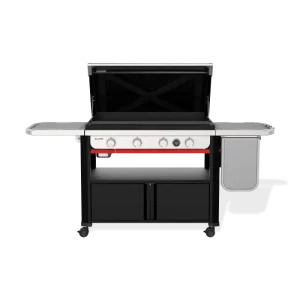
Weber Slate griddles
A weber slate griddle uses a flat-top cooking surface and has maintenance needs that differ from a conventional grill. Rather than open cooking grates, the surface requires regular scraping, cleaning and seasoning where recommended.
Owners considering a weber griddle, weber slate bbq or weber slate australia product should check the exact griddle dimensions when selecting storage, cleaning or cooking items. Weber slate accessories should be selected according to the model size and intended use.
A griddle for weber should also be suitable for the relevant barbecue model. Griddle plates, inserts and accessories are not universally compatible across all Weber gas grills.
Choosing Weber Accessories and Covers
Accessories can make regular maintenance and outdoor cooking more practical, but they should fit the barbecue and suit the cooking style.
Useful weber accessories can include:
Cleaning brushes and scrapers.
Drip pans.
Roasting racks and trivets.
Grill lights.
Skewers and baskets.
Hotplates and griddle tools.
Temperature probes.
Storage solutions.
When selecting a weber bbq cover, choose one that is designed for the barbecue’s shape and dimensions. A cover is useful for reducing exposure to dust, rain, sunlight and airborne debris, but it should be used correctly.
Before putting on a cover:
Let the barbecue cool completely.
Remove excess grease and food particles.
Empty the drip tray if required.
Ensure the barbecue is dry.
Avoid covering a wet barbecue for long periods.
A cover can help protect the exterior, but it does not replace regular cleaning and inspection.
When to Replace a Weber Thermometer
A lid-mounted weber thermometer gives an indication of the temperature inside the cooking chamber. It can be useful for managing barbecue heat, but it does not always represent the temperature at the cooking surface or inside food.
Replace the thermometer if:
The glass is cracked, broken or heavily fogged.
The needle remains in one position.
The reading is inconsistent.
The probe is corroded.
The gauge is loose in the lid.
It does not respond to changing temperatures.
For checking meat, poultry or fish, use a separate food thermometer. A Thermapen meat thermometer can be used to measure the internal temperature of food directly. A Thermapen thermometer or Thermapen One digital thermometer is particularly useful for checking temperature near the end of cooking.
When using a thermometer, insert the probe into the thickest part of the food where appropriate, avoid touching bone and clean the probe between uses.
Maintenance Tips to Extend BBQ Life
Regular maintenance helps parts last longer and makes it easier to identify problems before they become more serious.
After each cook
After cooking, allow the barbecue to cool to a safe cleaning temperature. Remove loose food residue from the cooking surface and check for grease build-up.
Keep the cooking area free from excess debris, particularly near burner openings and grease channels. Do not use cold water on a hot cooking surface, as sudden temperature changes can damage some materials.
Monthly inspection
A monthly check should include the cooking grate, burners, ignition parts, grease tray, lid hinges, handles, wheels and gas hose.
Look for corrosion, cracks, loose fasteners, grease accumulation and damaged wiring. If the gas hose is cracked, worn or damaged, stop using the barbecue until the issue has been addressed.
Seasonal deep clean
A more thorough clean at the beginning or end of the main barbecue season can support longer component life. Remove and clean accessible parts according to the barbecue’s care instructions.
Inspect burner tubes for blockage, check the grease system and confirm that the barbecue sits level and stable. Keep replacement records if several parts have been changed, as this can make future maintenance easier.
For a weber grill outdoor kitchen or weber outdoor bbq, make sure surrounding cabinetry, benches and ventilation areas remain clean and unobstructed. For a built in weber bbq, access to service panels, grease trays and gas connections should not be blocked by outdoor kitchen storage.
Finding Weber BBQ Parts in Australia
When searching for weber bbq parts, start with the exact barbecue model and part name. Adding terms such as “burner tube,” “cooking grill,” “igniter,” “grease tray” or “thermometer” can help narrow the search.
Searches such as weber bbq australia, weber barbecue range, weber barbeque, bbq grills australia, bbq shop australia and weber bbq stores may provide broad results, but product compatibility should always be checked before purchasing.
For owners planning to buy weber slate products or looking at a weber summit barbecue, it is useful to confirm the barbecue size, generation and cooking configuration first. This information makes it easier to select appropriate maintenance products, covers and replacement components.
Once you have confirmed the correct model and compatible parts, Shop Now to find suitable Weber BBQ products, accessories and replacement components for your barbecue.
Conclusion
Replacing worn weber bbq parts is an effective way to maintain the performance, safety and lifespan of a Weber barbecue. Start with the barbecue’s model details, confirm compatibility and inspect the existing component carefully before selecting a replacement.
Routine cleaning, grease management, correct use of a weber bbq cover and regular inspection of burners, cooking grills and ignition components can reduce avoidable wear. For Weber owners seeking barbecue-related products and accessories in Australia, Heat & Grill provides options across Weber barbecue ranges, including gas grills, griddles, built-in barbecue solutions and cooking thermometers.
Frequently Asked Questions
How can I find the correct Weber BBQ parts for my barbecue?
Start by finding the exact model name, model number and serial number. Compare these details with the compatibility information provided for the replacement part. Measurements and photographs can provide additional confirmation.
Can Weber parts be used across different barbecue models?
Not always. Weber parts can differ by barbecue range, size, fuel type and production generation. Only use a component on another model when its compatibility has been clearly confirmed.
How often should I replace Weber cooking grills?
There is no fixed replacement schedule. Replace cooking grills when they are severely rusted, warped, unstable, cracked or have heavily damaged coating. Regular cleaning and correct storage can help them last longer.
Is a Weber BBQ cover necessary?
A weber bbq cover can help protect a barbecue stored outdoors from weather, dust and debris. It should fit the specific model and be used only after the barbecue has cooled and dried.
Why should I use a separate meat thermometer?
A lid thermometer measures general barbecue temperature, while a food thermometer checks the internal temperature of meat, poultry or fish. A separate thermometer provides a more accurate way to assess whether food has reached the required internal temperature.